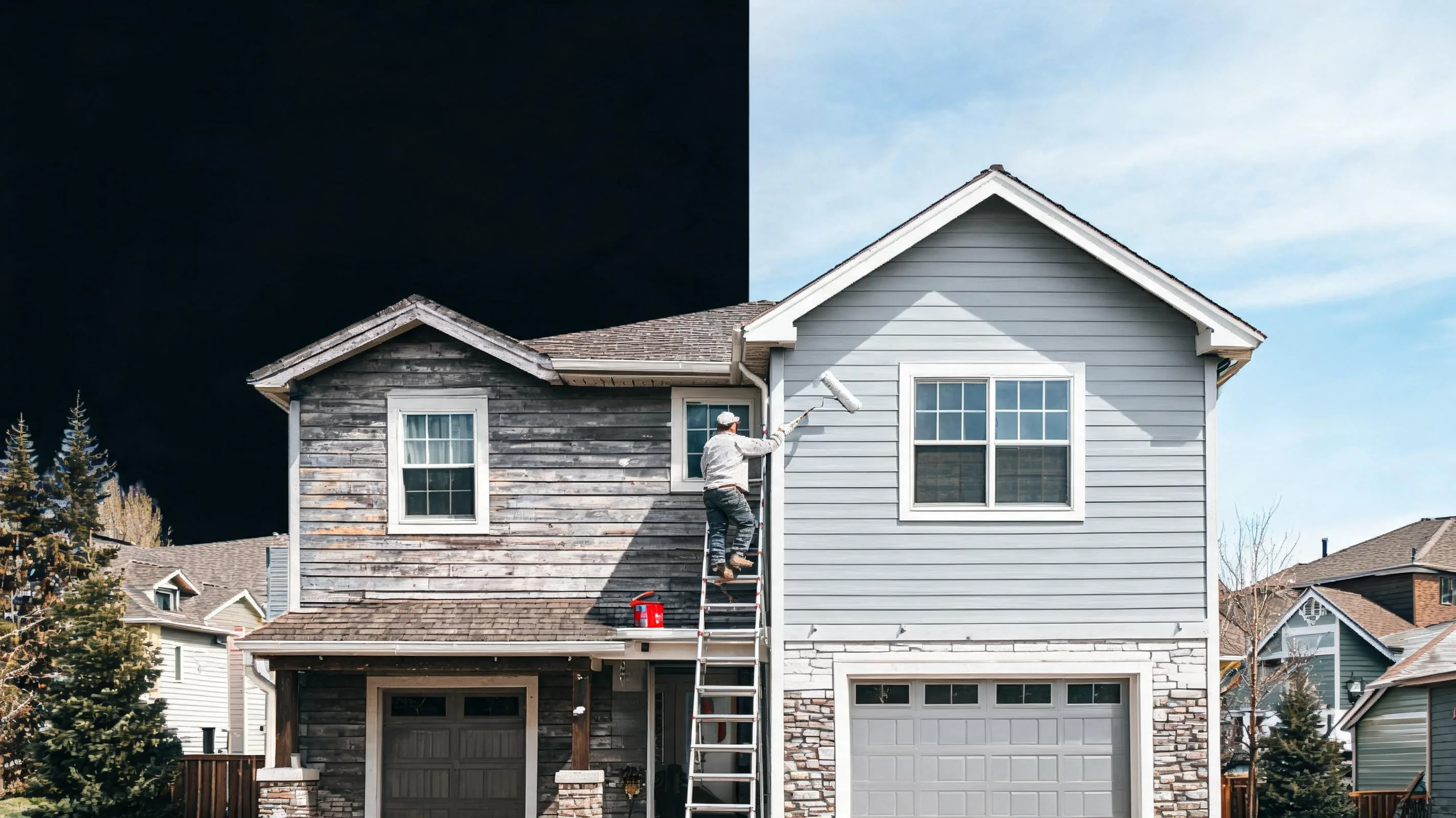
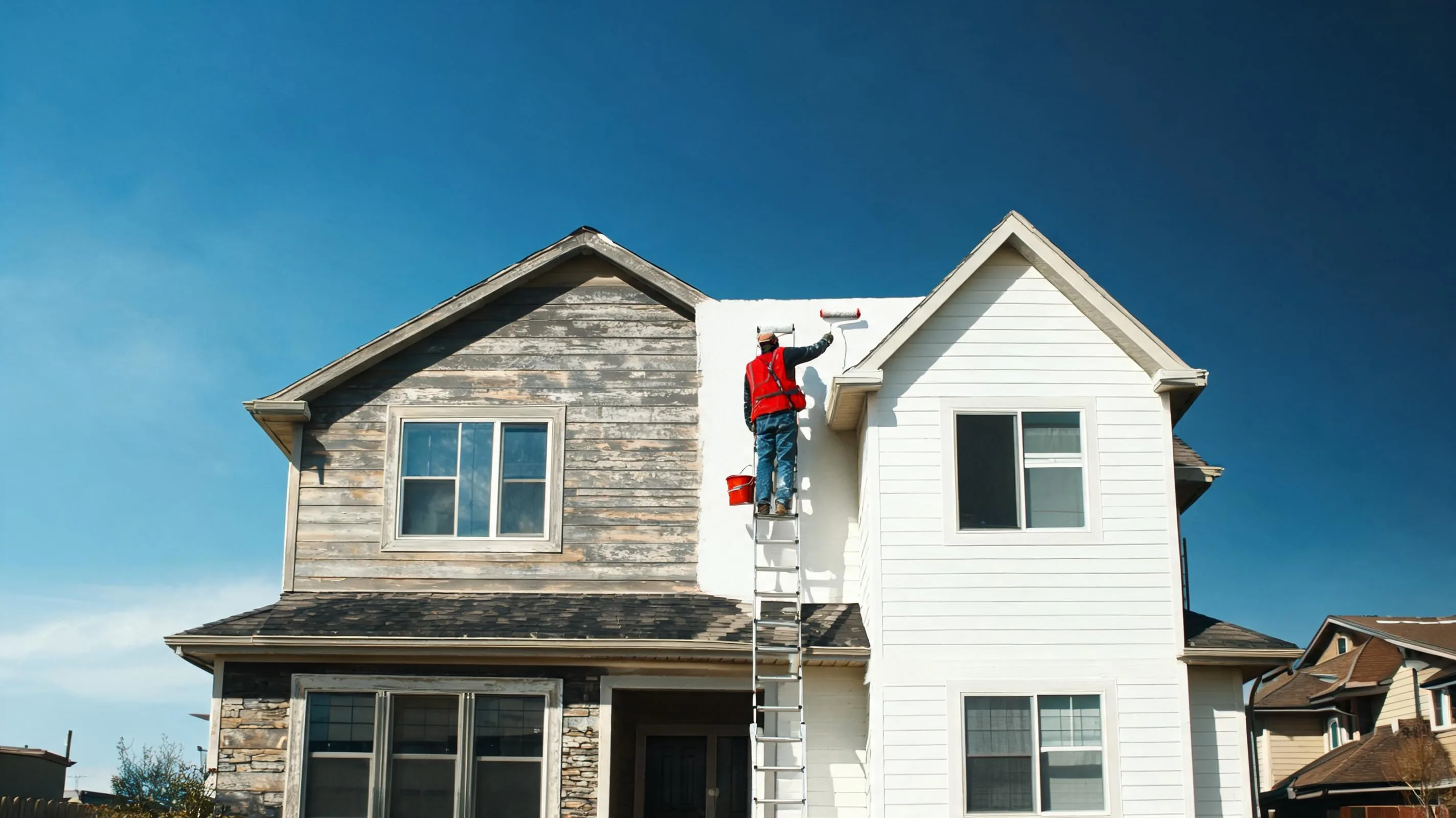
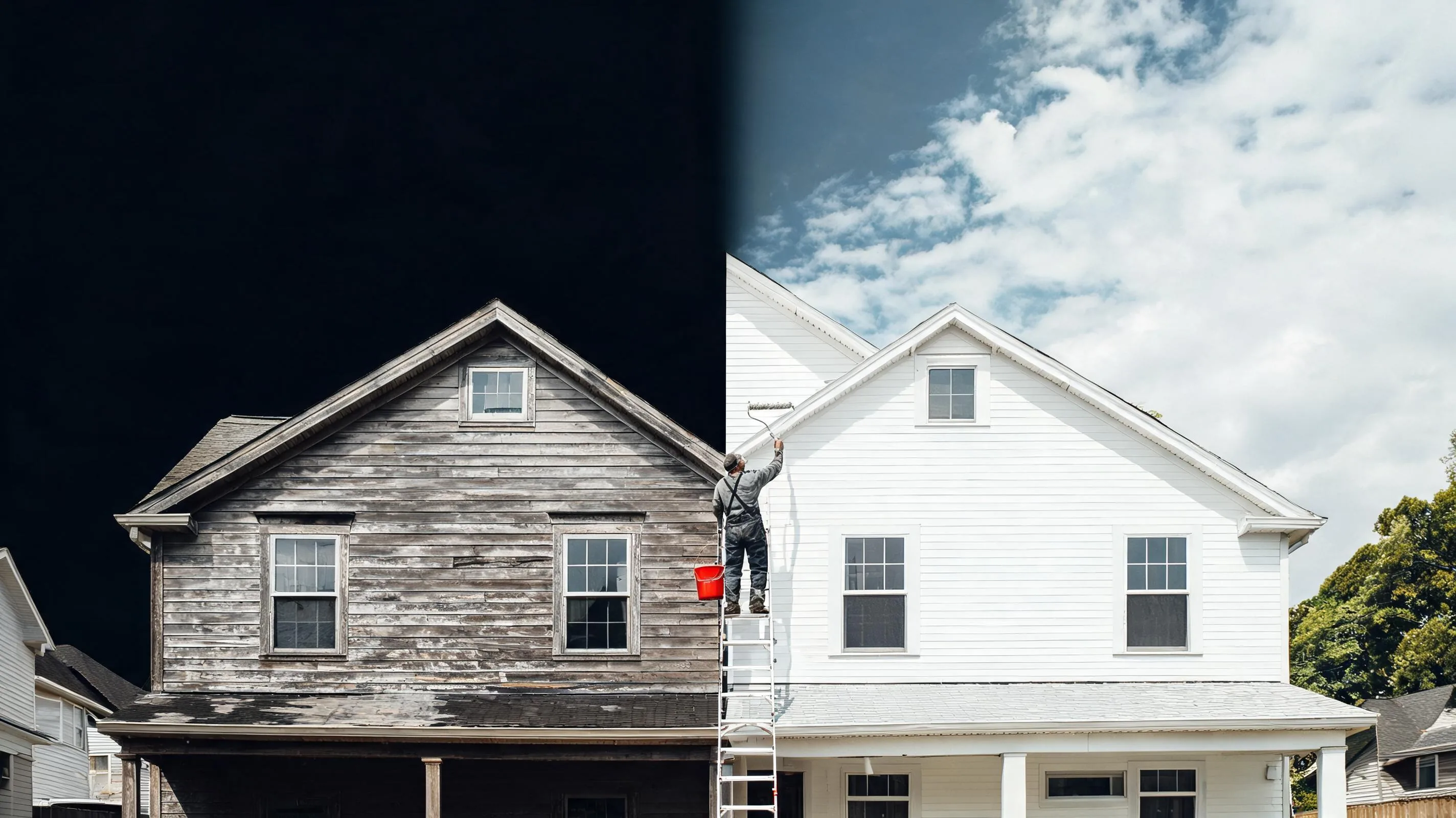
The 200 m Proximity Drop: How Calgary Painters Convert at 5%+ Around an Active Job Site
Drop a 200 m radius around your active job site and the response rate climbs above 5%. Here is the mechanics of why it works and how to execute it on every Calgary booking.
There is a single sentence in residential painting that outperforms everything else in your marketing stack: "We're painting the house at 347 Hawkwood Drive next week — free quote while our equipment is already on your block."
That sentence works because it does three things at once. It proves you are a real company with real work in the neighbourhood. It signals to the homeowner that they can walk forty metres and look at your quality before they call. And it removes the logistical excuse — the truck is already there, the mobilization cost is already sunk, the quote is genuinely easier to give.
This post is about how to execute that sentence at scale, and why the 200 m radius is the number that matters.
Why proximity converts at a different rate than cold drops
A standard cold zone drop in Calgary — pick a neighbourhood, saturate 4,000 doors — produces a 1–2% response rate on a well-designed piece. That is industry-standard and the math is still sound at a $5,570 average exterior ticket. But a proximity drop, centred on an active job, consistently runs above 5%.
The difference is not the design. It is the credibility signal embedded in the geography.
When your hanger lands on a door 150 metres from an address you name on the piece, three things happen that a digital ad cannot replicate:
- The homeowner can verify the claim in person. They can walk past the job site. If they like what they see — your crew's drop cloth discipline, the way the scaffolding is set up, the fresh colour on a comparable craftsman exterior — the hanger just became a referral. You are not selling them on your quality; you are letting the neighbour's house sell it.
- The implicit social proof is immediate. The Joneses hired a painter. The Joneses are getting it done. The mental trigger that homeowners have been suppressing — I know I need to deal with that faded west-facing wall — fires the moment a neighbour acts. Your hanger arrives at exactly that moment.
- The offer feels urgent rather than generic. "Call us anytime" has no pull. "Free quote while our lift is on your block this week" has a built-in deadline that is real. You actually will be gone next week.
What 200 m looks like on a Calgary residential block
Calgary's inner-city neighbourhoods — Brentwood, Haysboro, Lakeview, Kingsland — run on standard NTS grid lots, roughly 50 feet wide. A 200 m radius from a mid-block address covers approximately 120–180 homes depending on how the streets curve.
In the newer NW communities — Tuscany, Arbour Lake, Cougar Ridge — the lots are wider and the crescent streets mean fewer addresses per radius. Budget for 80–120 homes at 200 m in those areas.
In both cases, the drop is small enough to feel genuinely local and large enough to produce meaningful call volume. At 5% response on 150 homes, you are looking at seven to eight inbound calls from a single job.
Do the math: if your average exterior ticket is $5,570 and you close three of those eight calls, the additional revenue off one 150-home drop is north of $14,000. The marginal cost of printing and walking 150 hangers alongside an active job is minimal — you are already there.
The hanger copy that makes the proximity claim land
The sentence has to be on the piece. Not implied — stated directly, with the actual address or the street name.
The highest-converting framing we have seen on Calgary painter proximity hangers:
We're painting [neighbour's address or street name] next week. Free quote while our crew is already in your neighbourhood.
Below that: your business name, phone number, one trust signal (WCB number, liability coverage dollar amount, or Benjamin Moore / Sherwin-Williams contractor badge), and a five-year workmanship warranty callout.
What to leave off the proximity piece: your full service menu, your origin story, your social media handles. The hanger has one job — get the phone to ring from someone who already has a reason to trust you because they can see your work from their driveway.
One optional element that adds conversion without adding copy: a QR code that deep-links to a Google Street View of the job address or your Google Business profile photo gallery. Homeowners who scan that code before calling are warmer leads than those who call off the phone number alone.
For the complete mechanics of the Calgary painters door-hanger playbook — including design specs, timing co-ordination with job-site signage, and the full CAC breakdown — that page covers everything in one place.
Co-ordinating the drop with your job-site signage
The proximity hanger and the job-site yard sign are the same tactic at different scales. The yard sign tells everyone who drives the street; the hanger reaches the houses on the back lanes and the streets one block over that do not have line-of-sight to the sign.
The timing play: schedule your hanger drop for the same week the yard sign goes up. Homeowners who see both — sign at the curb, hanger on the door — call within seven days at roughly twice the rate of homeowners who only receive the hanger. The sign confirms the hanger is real. The hanger gives them a reason to act before you leave.
StreetDrop can co-ordinate your drop date against your job start calendar. Tell us the job address and start date when you book; we route the walkers for the same week. The GPS proof trail timestamps every door so you can overlay the walk dates against your inbound call log and measure the spread directly.
What this looks like across a Calgary exterior season
In a healthy exterior season — May through September — a Calgary painter running four to six active jobs at any given time has four to six proximity drop opportunities per rotation. That is not a batch campaign. It is a continuous feed of self-reinforcing proof drops, each one generating calls from homeowners who have literally seen your work.
The painters who build the fullest exterior books in Calgary are not the ones with the biggest Google budget. They are the ones who treat every active job as a marketing asset and deploy the 200 m radius as a standard step in the job-start checklist. By August they have dropped twenty blocks. The calls cluster. The routing becomes efficient. The season closes with a waitlist.
PaintTalk's forum thread on door-hanger ROI for residential painters covers the same proximity effect from the painters themselves — worth reading if you want to see how other operators have structured the cadence.
Watch a sample drop
A sample drop on real Calgary streets, on the page our clients watch.
Every StreetDrop proximity drop ships with a full GPS breadcrumb map — every street, every door, timestamped. Overlay it against your call log at day 14 and you can see exactly which streets produced which calls. That is the proof that tells you whether to expand the radius next job or keep it tight.