One Haul, One Block: The Leave-Behind Hanger That Compounds Junk-Removal Routes
After finishing a Calgary junk job, your crew is already on the block with the truck in the driveway. Hanging the immediate neighbours' doors in that moment turns one booking into a compounding street-level pipeline — here is how to build it systematically.
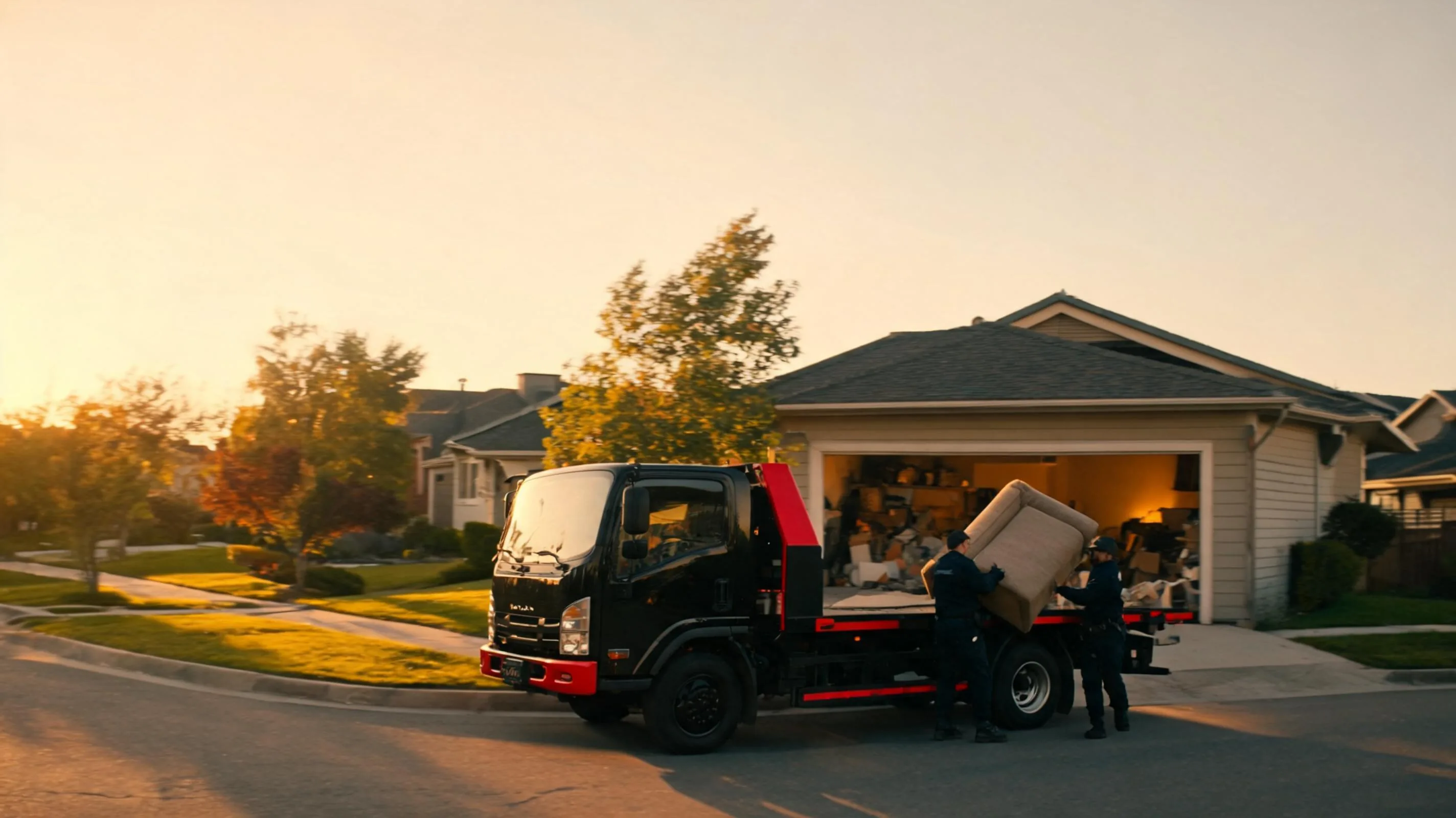
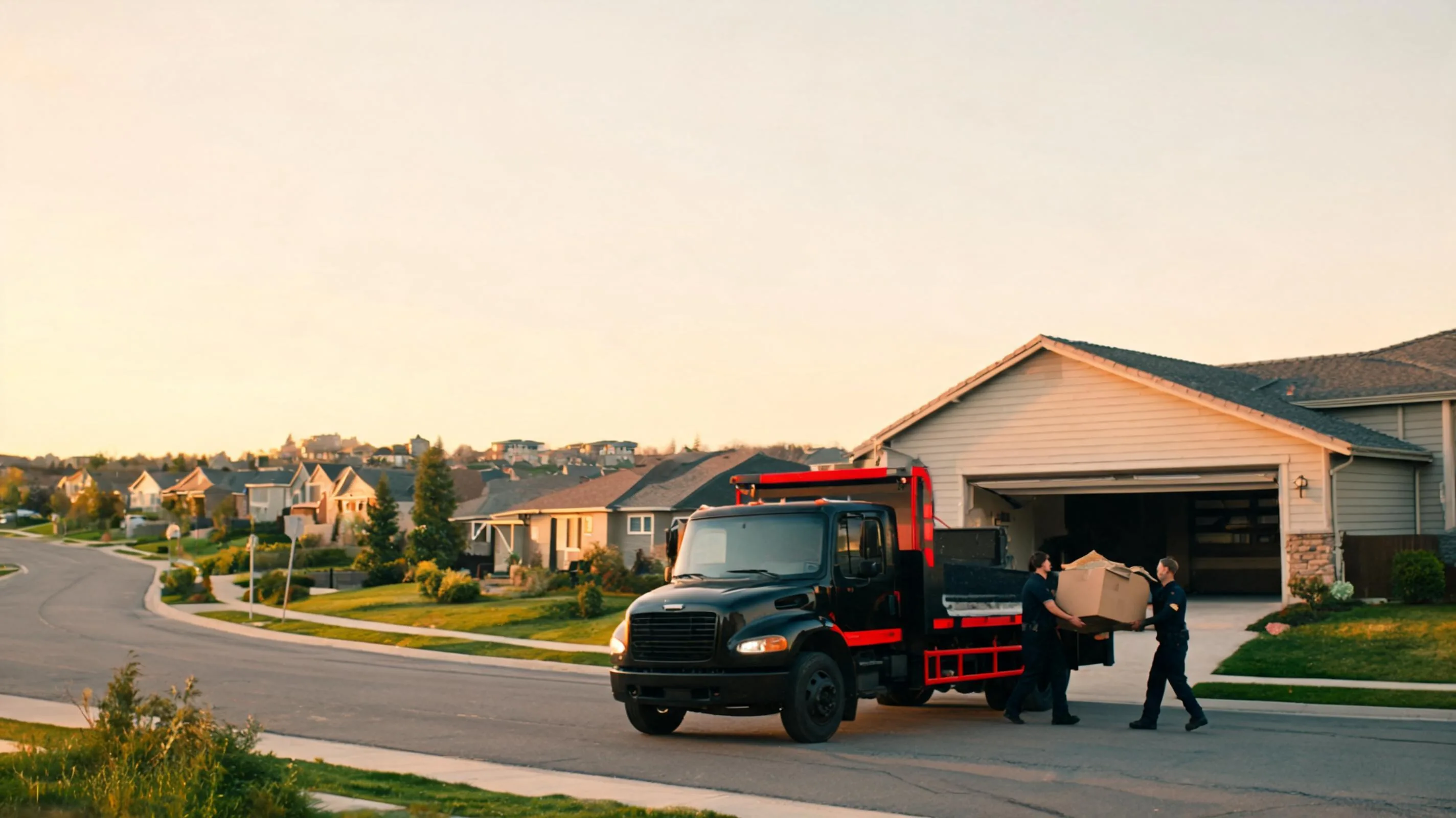
There is a window that opens the moment your crew finishes a Calgary junk haul and closes the moment the truck leaves the street. The truck is visible. The driveway is clearing. The neighbours who have been watching from the driveway or glancing out the kitchen window are registering, consciously or not, that a junk-removal crew just made something happen on their block.
That window — truck visible, social proof at peak, neighbours primed — is the best marketing moment a junk-removal operator can manufacture. Most crews drive away from it.
This post is about staying in it for ten more minutes. You already know the unit economics of a StreetDrop zone drop: roughly $0.06 per door for a GPS-tracked campaign covering 4,000 homes. The leave-behind play covers a different scale — 8 to 12 doors, crew already on the block, marginal cost near zero. It is not a replacement for a zone campaign. It is the compound layer that turns one good job into a street-level pipeline.
The broader playbook for junk-removal print marketing in Calgary lives at /for/junk-removal.
Why the truck in the driveway is your strongest social proof
Junk removal has a visibility problem that most other home services do not. When a homeowner hires a roofer or a painter, the result is visible for years. When they hire a junk crew, the result is an absence — the pile is gone, the garage is empty, the basement is clear. Neighbours see the truck, they do not see the transformation.
Except in the one moment that matters: while the job is happening. The truck on the street, the crew moving items out, the driveway in mid-clearance — this is the visible signal that something is being resolved. Neighbours who have their own pile, their own garage confrontation, their own deferred cleanout project register this at exactly the right psychological moment. The cognitive link forms: that crew could do mine.
A leave-behind hanger on the eight doors immediately adjacent to the job turns that passive observation into a prompted action. It does not need to explain junk removal. It just needs to name what just happened and give a number to call.
The mechanics: which doors, which crew member, which hanger
The leave-behind is a post-job task, not a mid-job one. The trigger is when the haul is loaded and the crew is doing the final walk-through before leaving. At that point, one crew member — not both — takes a small stack of hangers and walks the four houses on each side of the job and the four houses directly across the street.
That is eight to twelve doors. It takes five to eight minutes. The truck does not move until it is done.
The hanger used for leave-behinds should be different from your zone-drop design. Zone drops are built for cold audiences who have never heard of you. Leave-behinds are warm. The copy can acknowledge the moment more directly:
- "We just cleared your neighbour's garage. Now taking same-day bookings on this block."
- "Your neighbour called us. The truck is already here — book today, no delivery fee."
- "Just finished a haul two doors down. Spring cleanout? We're 10 minutes away right now."
The phone number should be the largest visual element. No QR code on a leave-behind — the caller is a warm neighbour, not a cold prospect, and they will use their phone to dial, not scan.
Scattered city-wide leads versus concentrated street-level density
The difference between scattered lead generation and dense street-level concentration is not just a routing efficiency point. It compounds over time in a way that changes the character of your business.
Consider two scenarios:
Scenario A — Scattered. You run Google Ads and get 15 calls a month from across Calgary. You dispatch to Beltline on Monday, Panorama Hills on Tuesday, Cranston on Wednesday. Each job is a one-off. The next call from any of those postal codes is weeks or months away, if it ever comes.
Scenario B — Dense. You run a StreetDrop zone in Altadore and leave hangers on the 10 adjacent doors after every job in that zone. Month one: 10 calls, 4 jobs, all in Altadore. Month two: 3 of those clients refer a neighbour, you do 2 more leave-behind drops, you get 6 calls. Month three: you are doing 8 jobs in Altadore in a single truck day, the crew knows every alley and the closest dump route, and your cost per job has dropped because you are spending zero time driving between jobs.
Route density is a moat. Once you own a neighbourhood — when the residents associate your company name with the service, when realtors who live there recommend you to clients, when the block captain has your number in their contacts — you are protected from the scattered competitor in a way that no ad spend can replicate.
The hanger that closes the loop: zone drops plus leave-behinds
Leave-behinds work best inside an existing zone campaign, not as a standalone tactic. The zone campaign creates the baseline saturation — every door in the neighbourhood has seen your name and offer. The leave-behind, dropped after a real job in that same zone, confirms the social proof and closes the credibility loop.
The homeowner who received a StreetDrop zone hanger from you two weeks ago and then finds a leave-behind on their door the day the neighbour's garage got cleared is experiencing two reinforcing signals: (1) this crew systematically covers this neighbourhood, and (2) their neighbour just used them successfully. That is a conversion sequence that paid search cannot reproduce at any price.
Watch a sample drop
A sample drop on real Calgary streets, on the page our clients watch.
The GPS trail from your StreetDrop zone shows exactly which streets were covered in the campaign. When you overlay that against your job log — which jobs were in the zone, which streets generated the leave-behind contacts — you can measure the compounding directly. Over a quarter, the pattern is consistent: streets with a zone drop followed by a leave-behind convert at two to three times the rate of zone-only streets. That data lives in the StreetDrop portal and it is updated after every campaign.
What the leave-behind costs and what it earns
The incremental cost of a leave-behind campaign on top of a zone drop is small:
| Item | Cost or note |
|---|---|
| 50 extra hangers per month (leave-behind stack) | ~$15–$25 at print run |
| Crew time per leave-behind event (8–12 doors) | 5–8 min; absorbed into post-job walkthrough |
| Incremental calls per 50 hangers (warm, post-job context) | 3–8 (warm audience converts 3–5× higher than cold zone) |
| Revenue on 2 conversions at $350 avg ticket | $700 |
That math holds even at the conservative end. A $25 stack of 50 leave-behind hangers, deployed after every job over a month, generates materially more revenue per hanger than any other marketing channel a single-truck operation has access to.
The compounding is the part that does not show up in a month-one ledger. The leave-behind client who books in May refers their neighbour in August. That neighbour leaves a Google review that drives an organic search booking in October. The October client lives two blocks from your original April zone. By the following spring, you have a neighbourhood that calls you without a hanger because the reputation is already there.
Building the habit into your crew's post-job routine
The biggest operational risk with the leave-behind system is that it depends on crew execution. If hanging the adjacent doors is optional or forgotten in the post-job rush, it does not happen. Make it part of the checklist:
- Final walkthrough and client sign-off
- Truck load secured
- Leave-behind stack handed to crew member 2
- 8–12 adjacent doors covered while crew member 1 finishes paperwork
- Truck departs
Some operators put the leave-behind stack in a dedicated spot in the cab — the same place every time — so it is visible and routine. Others build it into the job completion app or the dispatch sheet: "Leave-behind: yes/no, count dropped." The tracking matters because it tells you which jobs generated leave-behinds and which did not, and you can cross-reference that against which jobs generated referrals.
The cluster index at /blog/industry/junk-removal has more on building systematic print marketing pipelines for Calgary junk-removal operations.