Ants in April, Wasps in June: A Spring Pest-Control Hanger Calendar for Calgary
Calgary's spring and summer pest cycle follows a predictable sequence — carpenter ants in April, pavement ants through May, wasp queens building in June, spiders by late July. A staged hanger calendar matches each emergence window so you reach homeowners before panic, not after.
Most pest control marketing is reactive. A homeowner finds a wasp nest under the deck, or discovers carpenter ants in the window frame, and they Google a pest control company in a state of mild alarm. The operator who wins that call wins it on speed and availability — whoever answers the phone first at a reasonable price.
That is a real and necessary part of the business. But it is not where the most profitable pest control work comes from.
The most profitable pest control jobs are the ones where a homeowner calls you before the infestation is established — for a preventive spray program, a proactive assessment, or an early-season barrier treatment. Those homeowners are calm, they are making a planned purchase, and they are significantly more likely to sign a quarterly maintenance plan than the homeowner who found a colony behind the baseboards in July.
A staged door-hanger campaign across spring and early summer is how you build that proactive customer base in Calgary. The key is timing each drop to match the specific pest's emergence window — so the hanger lands when the risk is real and becoming visible, not weeks after the homeowner has already dealt with it.
This is a different challenge from the fall mouse campaign. The September drop targets one pest at one moment. Spring pest control has a sequence of emergence events spread across four months, and each one is an opportunity to put your name on the door when the homeowner is just starting to notice.
Calgary's Spring and Summer Pest Sequence
Calgary's climate compresses the pest calendar differently than softer-winter cities. The extended cold means overwintering pests emerge with high urgency when temperatures finally rise — they are not easing into activity, they are releasing from four or five months of dormancy simultaneously. Understanding the emergence sequence is the foundation of a staged hanger strategy.
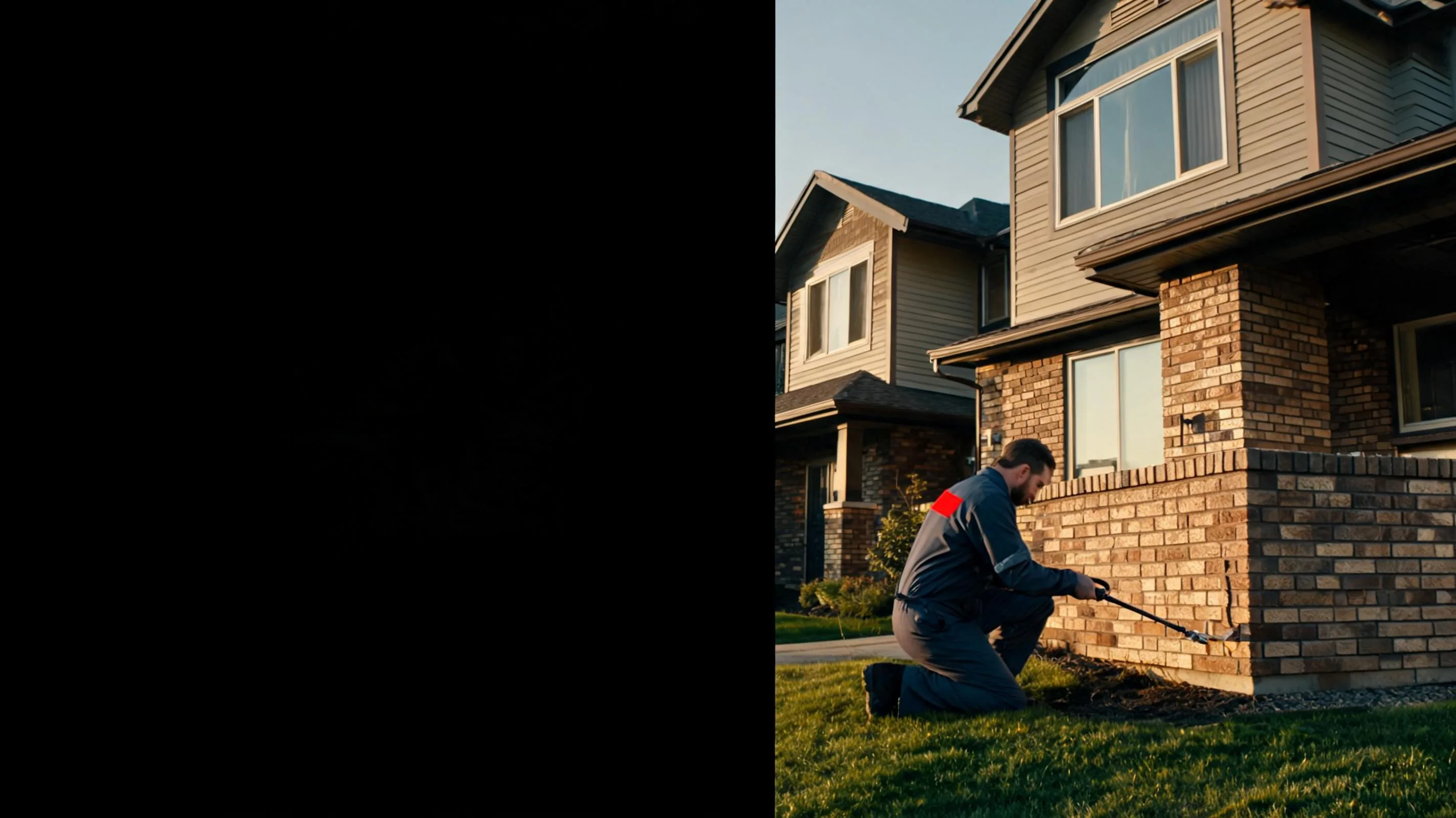
Carpenter ants — late April to mid-May. Carpenter ants overwinter as established colonies in wood structures — fence posts, deck framing, older window frames — and begin foraging aggressively as soon as sustained daytime temperatures reach 10°C. In Calgary's mature neighbourhoods (Killarney, Wildwood, Lakeview, Knob Hill), older housing stock with wood-frame construction and aging trim provides ideal harborage. A homeowner who sees a carpenter ant trail in April is looking at an established colony, not a scout — the nest has been there since last summer or earlier.
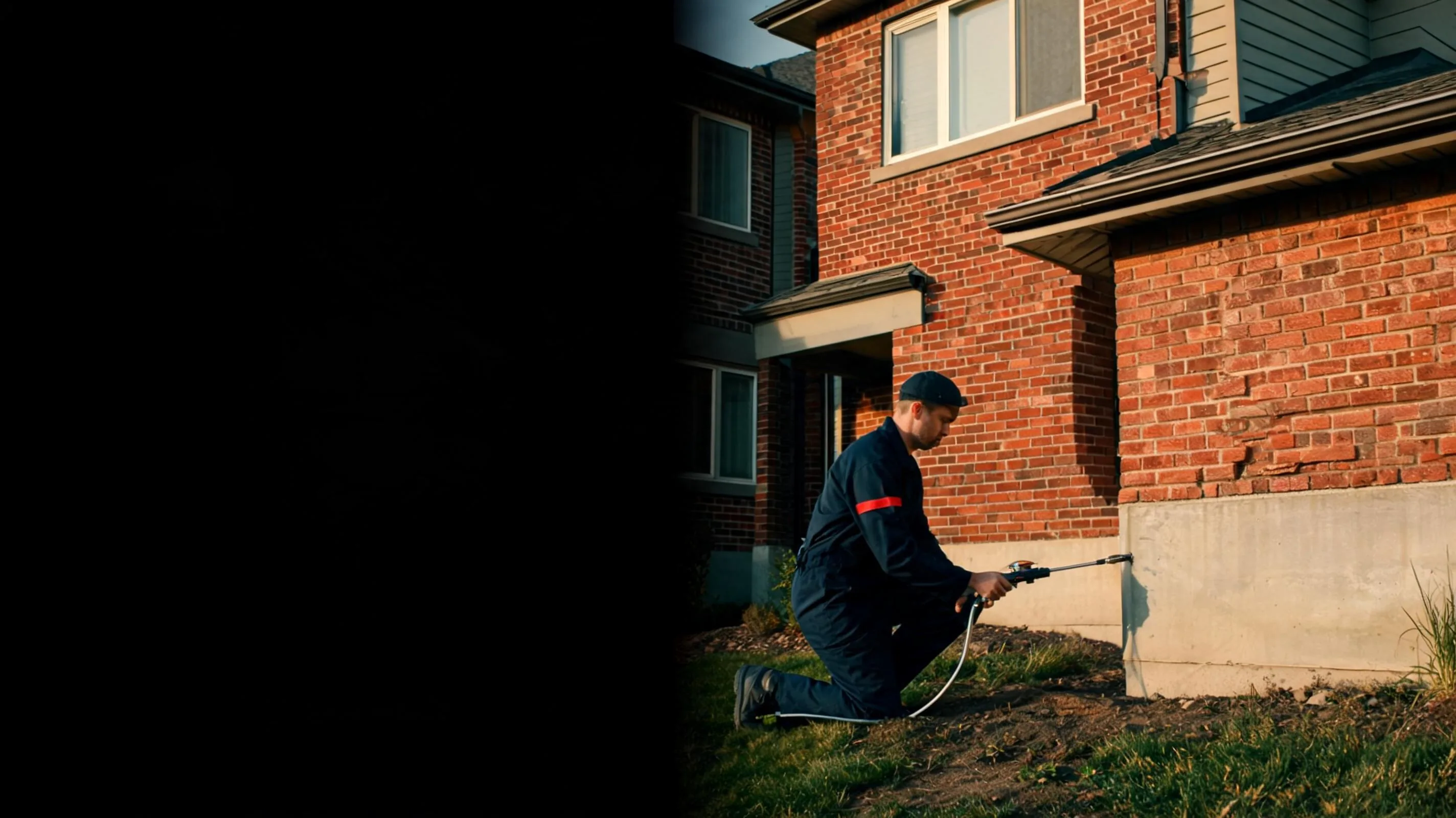
Pavement ants and odorous house ants — May through June. These smaller species are the most common early-season ant complaint in Calgary new builds and suburban homes. They emerge through cracks in concrete, expansion joints in driveways, and foundation perimeters as the soil warms. The homeowner notice pattern is: ants in the kitchen in May, trailing along the baseboard from a gap at the sliding door threshold.
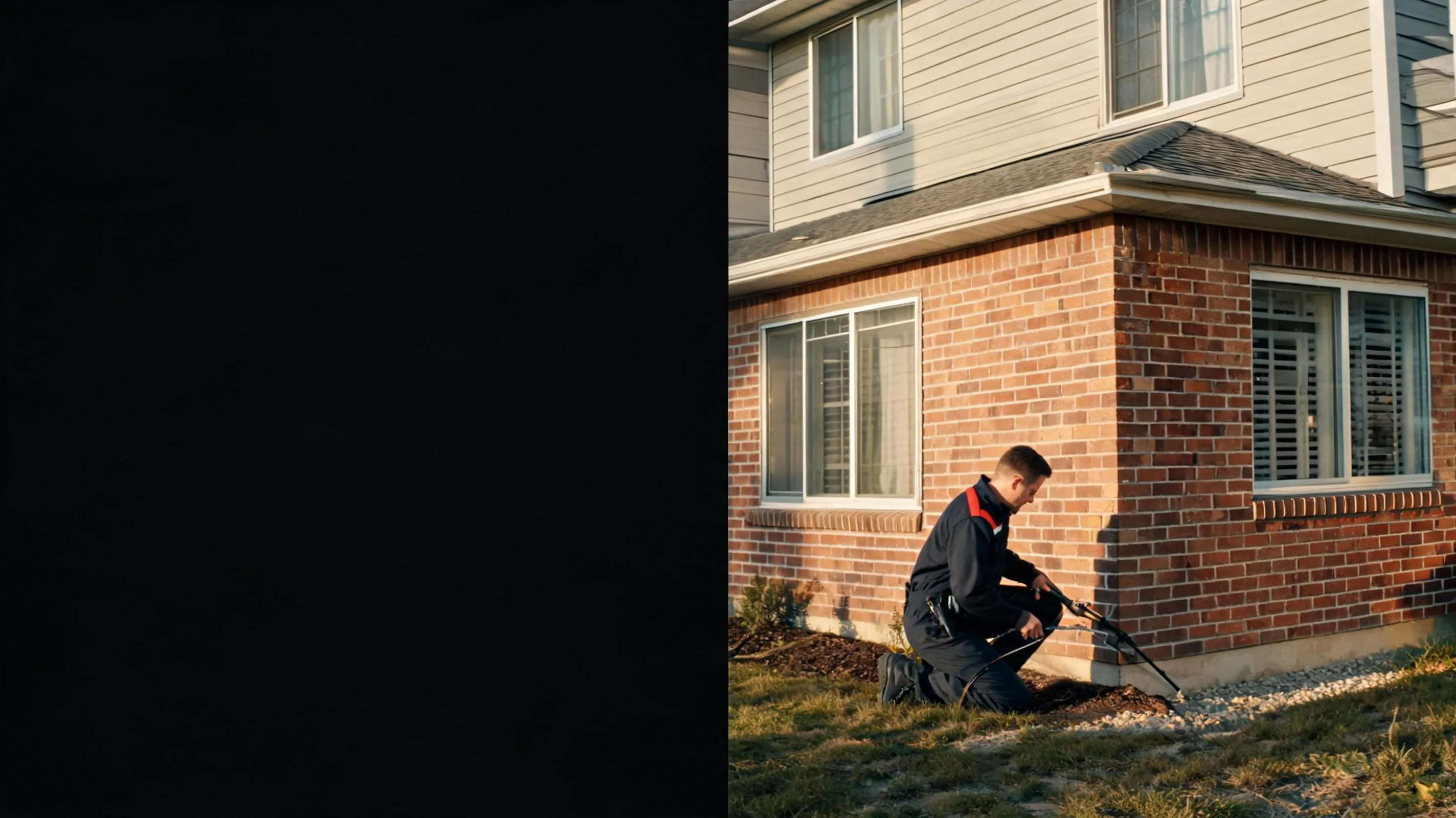
Wasp queens — June, early nest-building. Yellow jacket and bald-faced hornet queens emerge in late May and begin building nests in June. A nest found in June is the size of a golf ball and can be treated in under 20 minutes. The same nest found in August is the size of a basketball, contains several hundred workers, and is a significantly more complex removal job. This is the clearest case in pest control where early intervention has a direct impact on both cost and complexity — for the homeowner and for you.
Spiders — late July through August. Cross spiders and cellar spiders peak in late summer as their prey population (smaller insects) hits its maximum. Hobo spiders, misidentified as brown recluses by Calgary homeowners with some frequency, trigger calls in August. Exterior spider barrier treatments applied in late July significantly reduce indoor migration.
A Month-by-Month Spring and Summer Hanger Calendar
The staged approach means you are not running one pest control hanger and hoping it catches everything. You are running targeted drops matched to each emergence window, each with copy that names the specific pest and explains the specific risk.
| Month | Target pest | Hanger in-hand date | Order cutoff | Primary offer |
|---|---|---|---|---|
| April | Carpenter ants | April 1–7 | March 18 | Colony assessment + treatment quote |
| May | Pavement ants, odorous house ants | May 1–7 | April 17 | Exterior perimeter barrier treatment |
| June | Wasp queen / early nest | June 1–7 | May 18 | Early-season nest removal + prevention |
| July | Spiders, wasps (active nests) | July 1–7 | June 17 | Spider barrier treatment + nest removal |
Each drop is targeted at a different homeowner trigger. The April hanger speaks to the homeowner who just noticed ants in the garage. The June hanger speaks to the homeowner doing yard work who spotted a small papery structure under the eave. The order cutoffs above assume the standard 11–17 day production and delivery pipeline — the same back-calculation logic applies regardless of season.
Not every operator needs to run all four drops. A pest control business that specialises in ants and wasp removal runs April and June. A general pest company with a quarterly plan to promote runs all four. The calendar is modular; the principle is consistent: arrive on the door before the homeowner is searching.
Proactive vs Reactive: The Conversion Rate Difference
The proactive homeowner and the reactive homeowner are not equivalent revenue opportunities, and the difference is worth being explicit about.
A homeowner who calls in July because they have an active wasp nest is buying a single service call. They are comparing you on price and availability. They want the nest gone today or tomorrow. Their decision window is 24 hours and their brand loyalty is low — they will Google again in spring if they did not save your number.
A homeowner who called in June because your hanger arrived before they noticed a problem, who has now had a positive experience with your technician, and who was offered a quarterly maintenance plan at the time of service is a different customer profile. They have had time to make a considered decision. They know your name from the hanger, they have a positive first impression from the service, and the quarterly plan conversation happens in a calm environment rather than a stressful one.
Operators who have run the staged spring hanger approach consistently report that quarterly plan close rates are materially higher on proactive-call customers than on reactive emergency customers — regardless of whether the service itself was identical.
Neighbourhood Targeting for Spring Pest Drops
Spring pest control hanger targeting follows a different logic than fall mouse control, where foundation age is the primary predictor. Spring pest emergence is shaped by:
Tree canopy density for carpenter ants. Carpenter ants nest in decaying wood and forage in wood-frame structures nearby. The highest-risk zones are mature inner-city neighbourhoods where older trees have partially decayed branches or stumps, and where the housing stock has wood-frame construction from the 1950s–1980s. Killarney, South Calgary, Altadore, Hillhurst, and Richmond are priority zones for an April carpenter ant drop.
New construction density for pavement ants. Pavement ants are common in new builds because construction disturbs soil and creates abundant entry points at concrete-to-structure interfaces. SE communities like Mahogany, Auburn Bay, and Legacy — built on former agricultural land with significant ant populations in the soil — produce high pavement ant call volume every May. A late-April drop in these zones, arriving as the ant activity becomes visible, converts well.
Mature tree-lined streets for wasps. Yellow jacket and bald-faced hornet queens prefer sheltered nest sites: under decks, in soffits, in dense shrubs. The neighbourhoods with the highest wasp nest call density in Calgary tend to be those with mature landscaping and older housing — Lakeview, Glenmore Landing, Bayview, Parkhill. A June drop in these zones arrives when the queens have been building for 2–3 weeks and the nests are still at the treatable early stage.
What to Say on a Spring Pest Hanger
Spring pest hangers fail when they try to cover everything. "We treat ants, wasps, mice, spiders, bedbugs, cockroaches..." reads like a directory entry, not a reason to call. The copy that converts picks one pest per drop and explains the specific risk in two or three sentences.
For the June wasp hanger, the copy hierarchy looks like this:
Headline: "Wasps build nests in June. Early removal takes 20 minutes."
Sub-headline: "Found a small papery nest under your eave? Call now — before the colony is established."
Body (40–60 words): "A June nest is the size of a golf ball. An August nest is the size of a basketball, with hundreds of workers defending it. We treat and remove early-season nests across Calgary for $150–$200 flat. Free assessment if you are not sure what you are looking at."
CTA: Phone number + QR code to booking page.
That is it. The specificity — golf ball in June, basketball in August — does more conversion work than any amount of credential copy. The homeowner has a visual reference and understands the consequence of waiting.
Watch a sample drop
A sample drop on real Calgary streets, on the page our clients watch.
StreetDrop's GPS-logged delivery means your June wasp hanger reaches the same streets as your April ant hanger — and the proof of coverage tells you which zones generated inbound calls on the first drop, so you can prioritise those blocks for the follow-on drops. Over a full spring and summer calendar, that data becomes a heat map of which parts of a zone are highest-responding for pest control, and that heat map shapes your zone selection in subsequent years.
The full pest control playbook — including zone selection guidance for Calgary and timing for the fall mouse season — lives at /for/pest-control. The pest control cluster index links to both the fall mouse campaign post and this spring calendar.
Health Canada's pest control product information page is a credible reference you can include on your website or in a follow-up email to customers who ask about product safety — it reinforces your professionalism without requiring you to produce the content yourself.