Re-Treat-Free Guarantee: The Single Trust Badge That Closes 30% More Calgary Quarterly Contracts
A written re-treat guarantee removes the biggest objection in Calgary pest control before the homeowner even calls. Here is how to position it on a door hanger and why it converts.
Most Calgary pest-control operators bury their best conversion asset in fine print nobody reads. The re-treat-free guarantee — a written commitment to return and retreat at no charge if pests come back within a defined window — is the single piece of positioning that most directly addresses the reason homeowners hesitate before booking.
This post is about how to use that guarantee correctly: where it lives on a door hanger, how to frame it so it sells protection rather than doubt, and why operators who make it prominent on their physical marketing close quarterly maintenance contracts at a meaningfully higher rate than those who don't.
The objection nobody says out loud
Ask a homeowner why they are not on a quarterly pest-control plan and they will usually say one of three things: they don't think they need it, they haven't gotten around to it, or they're not sure which company to use.
What they usually don't say — but what often sits behind all three of those answers — is this: what if I pay and the problem comes back?
Pest control is unusual among home services because the result is invisible and perishable. A new furnace you can see and feel. A freshly painted wall is immediately obvious. A treated home looks identical before and after, and the "proof" that the treatment worked is simply the absence of a problem — which is impossible to distinguish from a problem that hasn't started yet.
That invisible outcome creates a specific anxiety: paying for a service and then finding out it didn't hold. The homeowner who calls about mice in October and pays for a treatment is already calculating the risk that the mice will be back in January and they will be facing the same bill again.
Why this belongs on the door hanger, not the invoice
The conventional approach is to mention the guarantee during the sales call or include it in the service agreement. Those placements are not wrong, but they are late. By the time a homeowner is reading your invoice, they have already decided to hire you. The guarantee is not closing anyone at that point — it is just confirming what they hoped was true.
A door hanger reaches the homeowner before they have a problem, before they have called anyone, and before they have any reason to trust you over the four other operators who serviced their neighbourhood last fall. At that moment, the guarantee does heavy lifting that no other single piece of copy can.
The placement principles that convert:
Visually distinct, not fine print. A guarantee buried in the bottom third of a hanger at 8pt type is the same as no guarantee. It belongs in a callout block — a bordered badge, a stamp treatment, or a single line at larger type that the homeowner can read in the three seconds they are holding the hanger before deciding to keep it or recycle it.
Specific, not vague. "Satisfaction guaranteed" is furniture at this point — every competitor says it and nobody believes it means anything. "We return and re-treat at no charge if pests come back within 60 days" is a concrete commitment. Concrete commitments register.
Framed as confidence, not doubt. The wrong framing: "in case something goes wrong." The right framing: "because we stand behind our work." The guarantee should project certainty in the treatment, not anxiety about failure. Operators who frame it as a risk-reduction clause are accidentally communicating that failure is a reasonable expectation.
The positioning that sells protection over disgust
There is a visual and verbal trap that a meaningful share of Calgary pest-control hangers fall into: leading with the problem rather than the solution.
Close-up imagery of insects, graphic descriptions of infestation signs, before-and-after language that emphasizes the "before" — these creative choices attract the homeowner who already has an active problem and is ready to call anyone. They repel the homeowner who does not have an active problem but is exactly right for a quarterly maintenance plan.
The market you are missing by leading with disgust is larger than the market you are capturing by leading with it.
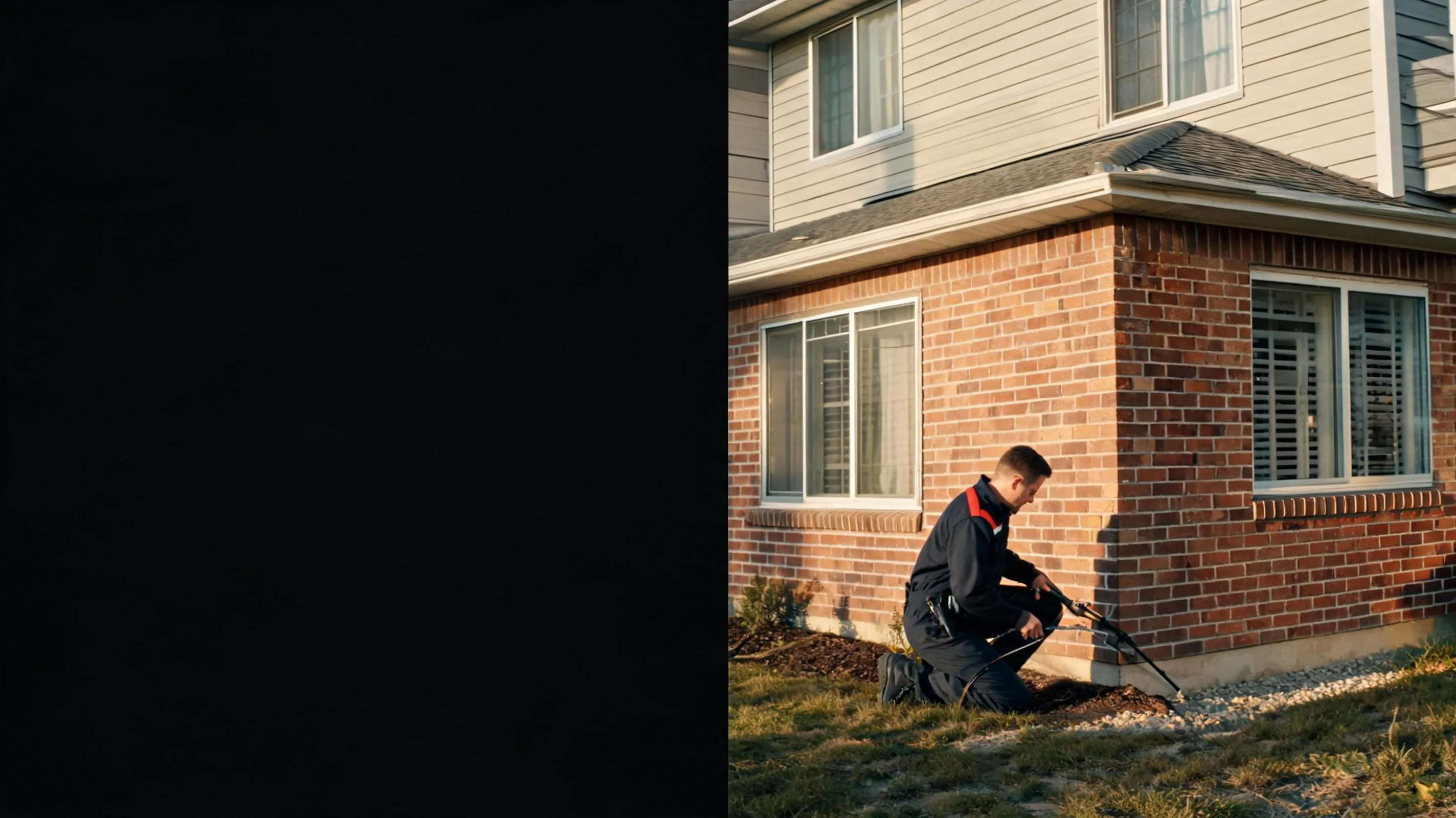
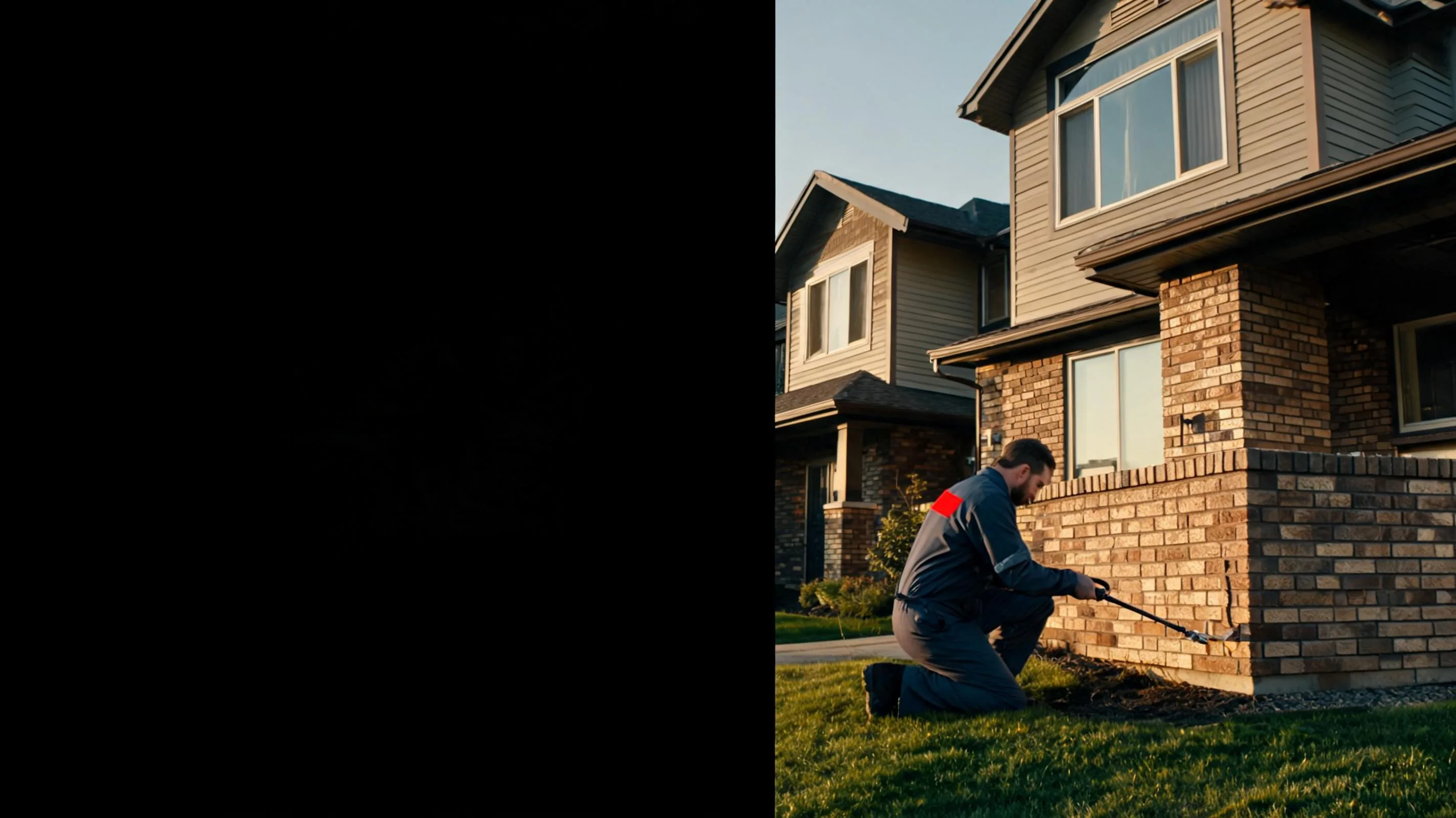
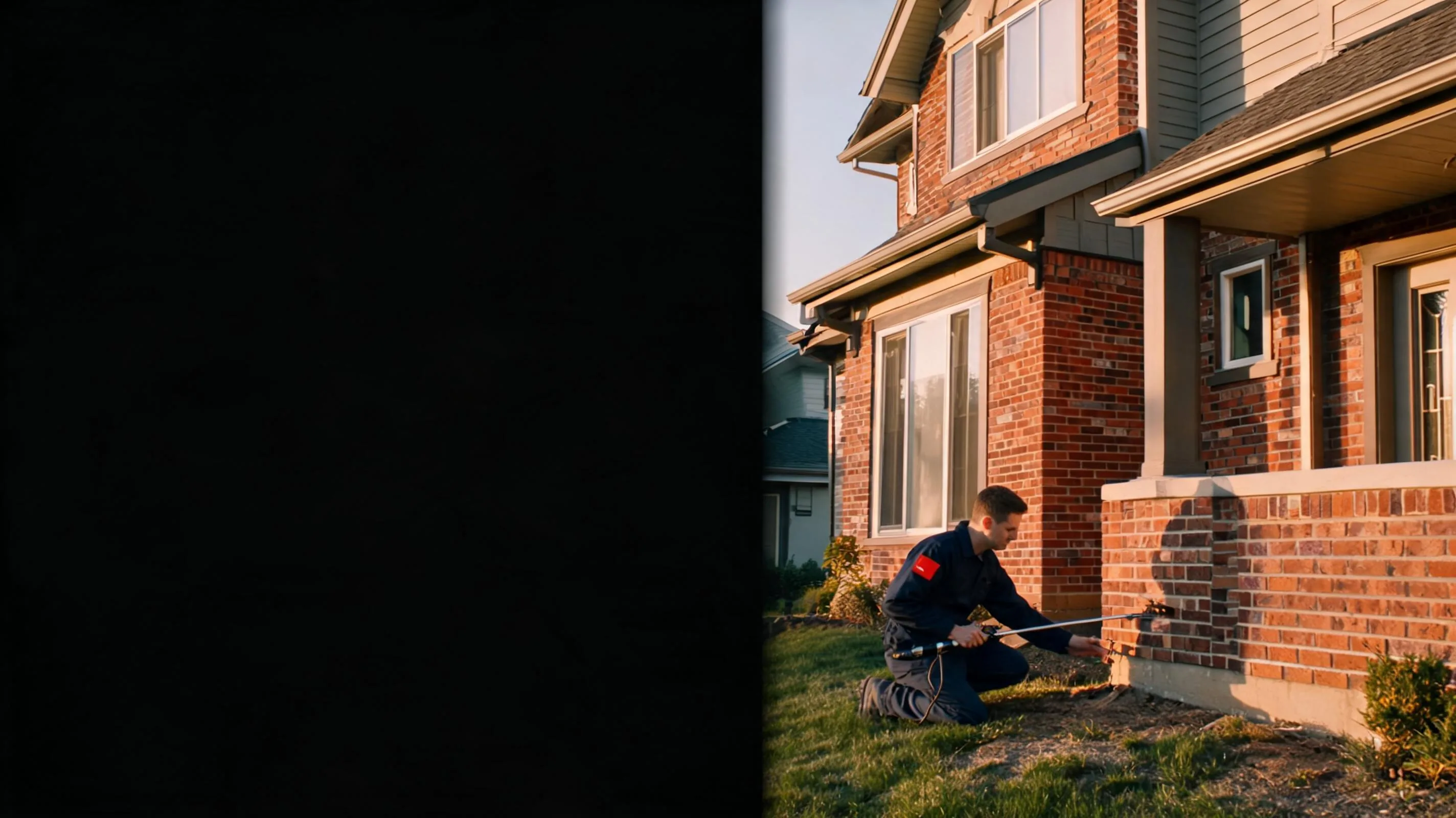
The hanger that builds a quarterly book leads with the protection frame: your home is protected before the problem starts. The technician finding the foundation entry points in October is not responding to a crisis — they are providing the same category of service as a furnace inspection or a roof check. A professional doing their job in a well-maintained home.
That framing is what the re-treat guarantee reinforces. A guarantee on a protection service says: we are confident enough in our work that we will stand behind it unconditionally. That is a different message than: we will clean up the mess if our treatment fails. Same commitment, entirely different positioning.
How to structure the hanger around the guarantee
The door-hanger design that performs best for Calgary quarterly pest-control contracts follows a consistent hierarchy:
- Seasonal hook at the top. One line that connects to what is happening right now — wasp nests in May, mice in September. This is the reason to keep reading.
- Core offer in the middle. Inspection + treatment + quarterly plan pricing. The $125/month number, if you offer it, belongs here — not buried, not asterisked.
- The guarantee badge. Visually separated, positioned just above or beside the call to action. "Re-treat free if pests return within 60 days" in type large enough to read without squinting.
- One phone number. Larger than anything else on the hanger. This is the single most important element on the piece — every design decision should protect its legibility and prominence.
If you offer pet-and-child-safe formulas, that certification earns a second badge at the same visual tier as the guarantee. The two objections that most commonly kill a quarterly sign-up are "what if it doesn't hold" and "what about my dog" — removing both in a single piece is the structural advantage of a well-designed door hanger over a Google ad that has six words of copy and a destination URL.
Target Pest Control's service guarantee page and similar Calgary operators who publish their guarantee terms publicly convert at a higher rate from all channels — not just door drops — because trust established before the sales conversation makes the conversation shorter.
The compounding effect across a Calgary block
The block-trigger dynamic in pest control is real and measurable. If one home in a residential block has an active wasp nest or mice, the adjacent homes are at elevated risk — pests do not respect property lines, and the same conditions that made one foundation entry-point exploitable likely exist in the neighbouring foundations as well.
A door hanger on every home in that block converts your active-job address into a street-wide trust signal. The homeowner at number 47 who sees a branded technician vehicle outside number 51, and then finds a hanger on their door with a guarantee badge and a protection frame, is being reached at exactly the moment when the message is most credible.
That is the geometry of the StreetDrop approach to pest-control marketing: GPS-tracked delivery to every door in the zone, timed to the seasonal window, with creative that leads with protection and closes with a guarantee that removes the last objection.
The guarantee does not cost you much if your treatment quality is high. The operators who hesitate to put it on the hanger are usually the operators who are not confident in the treatment quality — which is a different conversation. If you stand behind your work, say so, on the door, before anyone asks.
Watch a sample drop
A sample drop on real Calgary streets, on the page our clients watch.
What "30% more quarterly contracts" actually means
The 30% figure in this post's headline is directional, not a controlled-trial measurement. It reflects the consistent pattern we observe across pest-control campaigns where the guarantee is made visually prominent versus those where it is absent or buried.
The mechanism is straightforward: the guarantee removes the highest-frequency unspoken objection at the point in the buying journey when the homeowner is forming their short list. Operators who include it get more calls from warmer prospects. More calls from warmer prospects means a higher close rate on quarterly sign-ups. A higher close rate on quarterly sign-ups is the entire business model.
The guarantee is free to offer if your treatment quality justifies it. Putting it on the door hanger is a design decision that costs nothing extra and pays the difference between a campaign that generates emergency one-offs and a campaign that builds a recurring book.