First Frost Is Coming: The September Mouse-Migration Door-Drop Calendar for Calgary Pest Control
Calgary mice start moving indoors in late September. Here is the exact drop timing that puts your number on the door before the first scratch in the walls — not after.
There is a six-week window in Calgary every fall when a door hanger outperforms every other marketing channel you have. It opens in the last week of September. It closes somewhere around mid-November, when the ground is frozen solid and the mice that were going to move indoors have already moved indoors — into someone else's customer's house.
This post is about that window: when it opens, when it closes, and why the operators who win recurring winter contracts are the ones who ship in September rather than October.
Why mice move, and why they move in Calgary when they do
House mice and deer mice are not looking for warmth because they like comfort. They are tracking temperature gradients at the foundation level — gaps around plumbing lines, cracks in mortar courses, weep holes in brick veneer. The trigger for that search behaviour is sustained overnight lows below roughly 7°C.
Environment Canada's 30-year normals for YYC put the first sustained run of sub-7°C overnight lows in the last week of September. By October 15 the nightly low averages -1°C. By November 1 it is -5°C. The mice are not waiting for homeowners to notice.
The practical implication: the moment a homeowner hears scratching in the walls or finds a tell-tale sign in the back of a kitchen cabinet, they are past the early-intervention stage. Exclusion work — sealing entry points before activity is established — is faster, cheaper, and more effective than active removal after the fact. A door hanger in late September delivers exactly that message at exactly the right moment.
The drop timeline most operators miss by three weeks
The mistake is deciding to run a fall campaign in mid-October and then working forward from today. Work backward from the in-hand date instead.
If your target in-hand date is October 1 — meaning the hanger is on the door and generating calls during the highest-value conversion window — you need to place your order in the second week of September.
| Step | Calendar days |
|---|---|
| Copy and design approval | 3–5 days |
| Print production | 4–6 days |
| Delivery crew scheduling | 2–3 days |
| Walk (4,000-door zone) | 2–3 days |
| Total from order to first call | 11–17 days |
A September 15 order date gives you a comfortable October 1 in-hand. A September 28 order is the hard cutoff if you want doors touched before Thanksgiving weekend, when the temperature slide accelerates.
Operators who place their Calgary pest-control zone in August treat the September 28 order date the way they treat licence renewals: it goes on the calendar in July and it does not move. The operators who start thinking about it in mid-October are arriving after the window has already peaked.
What the September hanger says — and what it does not
The positioning at the September drop is protection, not reaction. That distinction matters.
A hanger that leads with a rodent image or disgust language attracts one type of caller: someone who has already found evidence and is in a panic. That is a fine customer, but it is not the full addressable market on the block. Most homes on that street have no active problem yet — and if you can reach them before they do, you get to sell exclusion plus a quarterly maintenance plan, not a single emergency call-out.
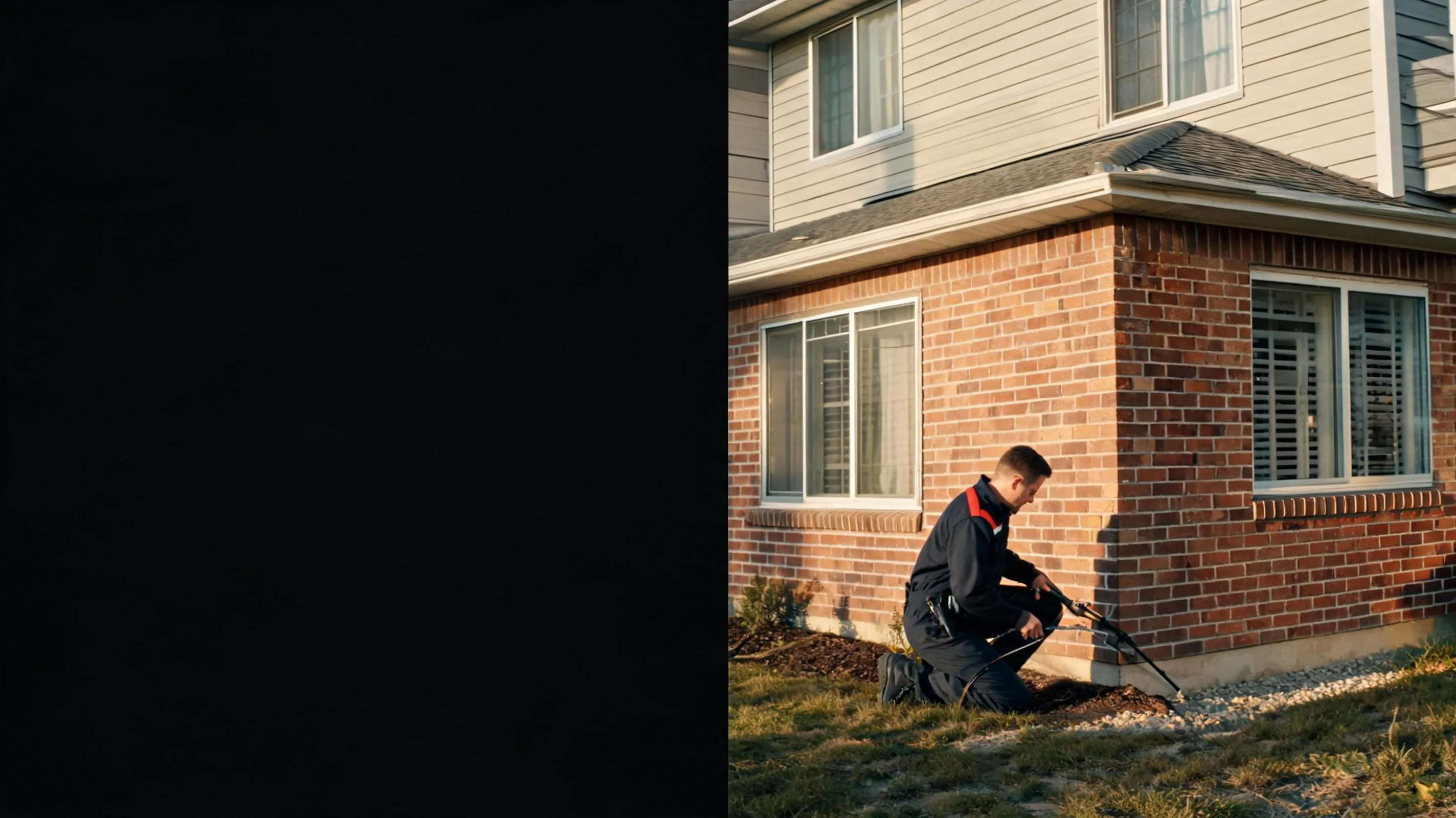
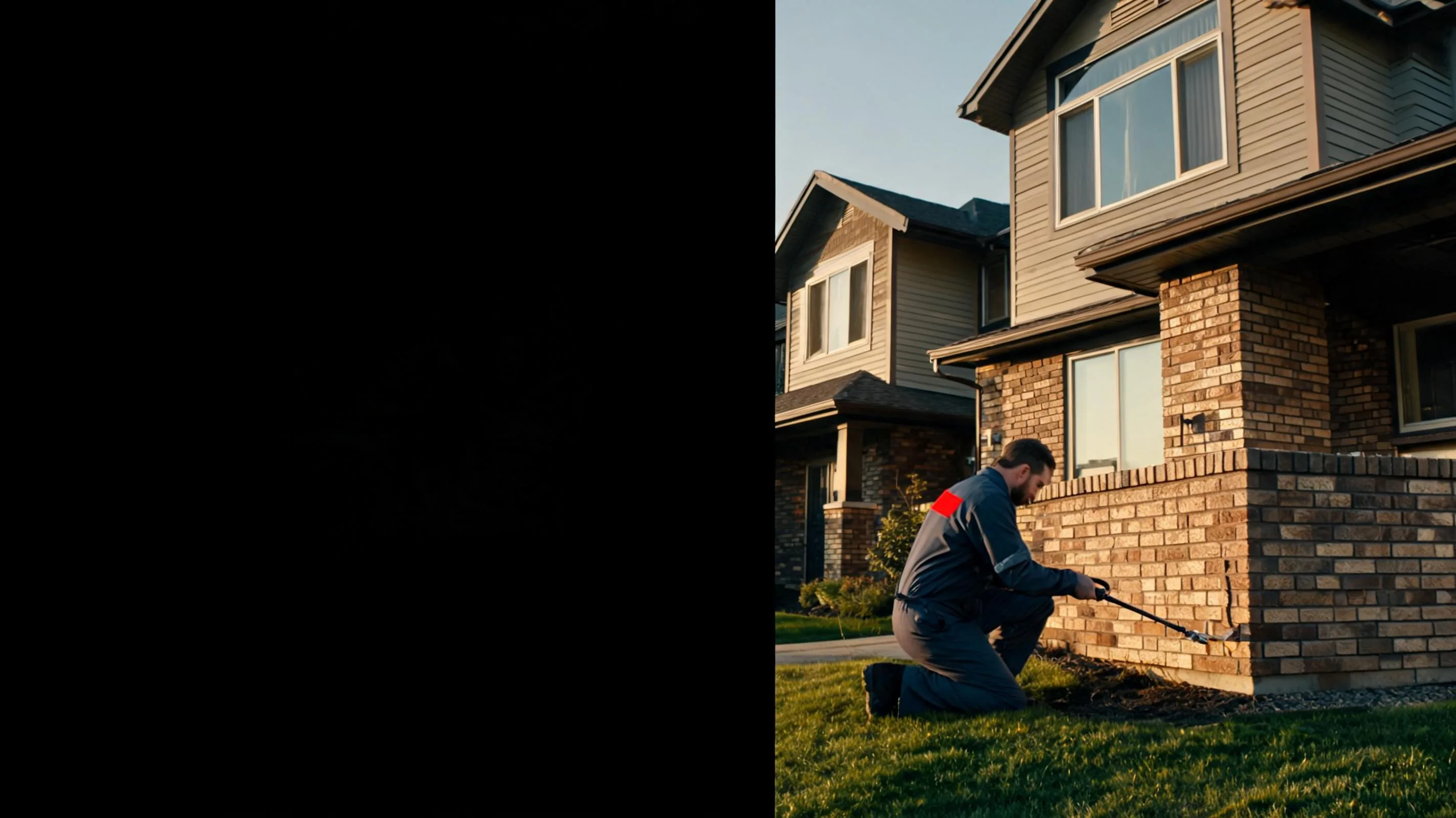
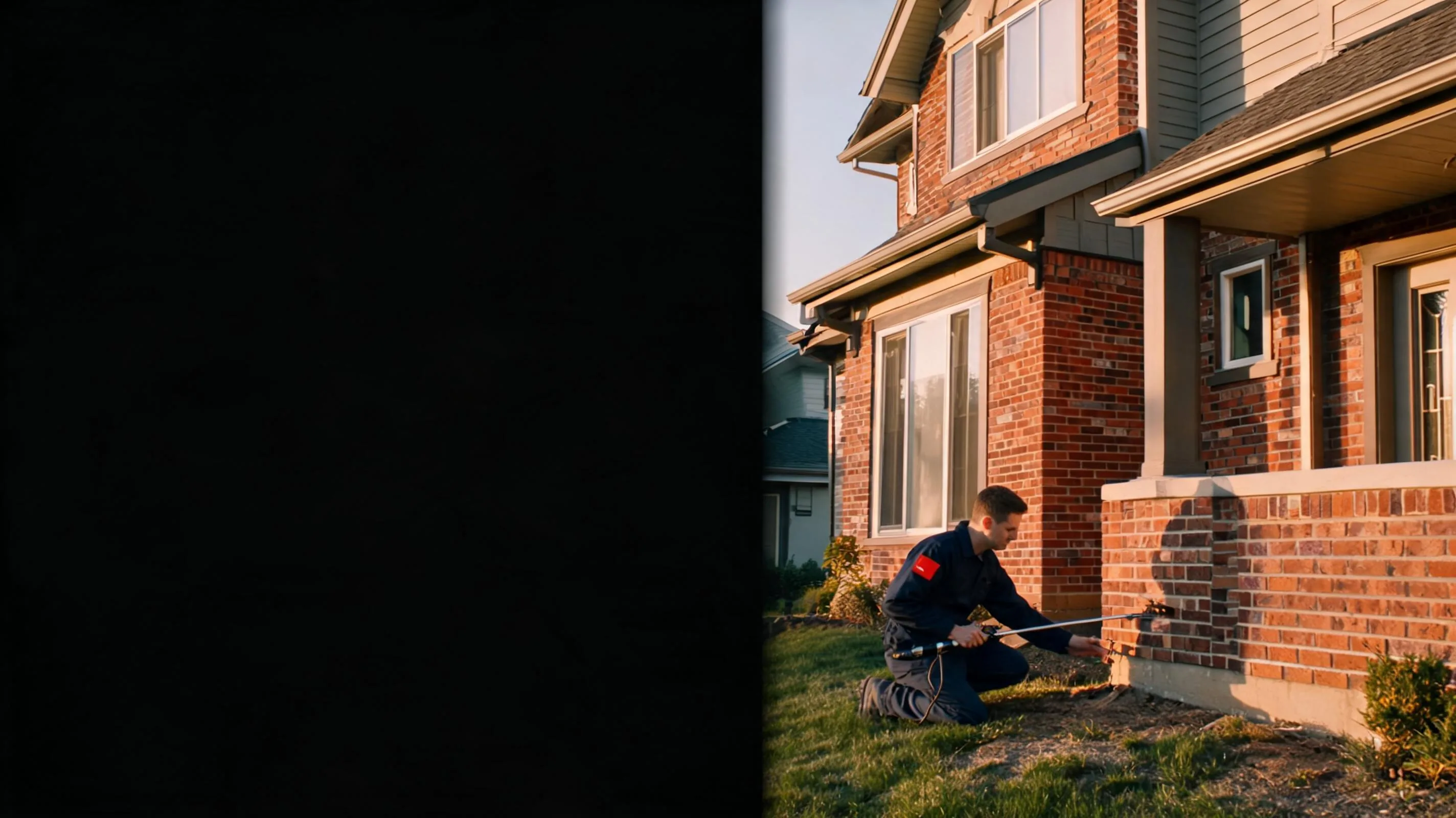
The September hanger that converts well leads with a protection frame: your home's foundation has entry points mice will use this winter — we find them and seal them before they find them first. The call to action is a free assessment, not a crisis callback.
From there, your trained technician does what technicians do: inspects, finds the gaps, quotes the exclusion, and presents the quarterly option. The recurring contract gets sold in person on a warm call, not through an ad — but the door hanger is what got you in front of a calm, planning-mode homeowner in the first place.
Two-wave strategy for the fall window
Most Calgary pest-control operators running fall campaigns structure two drops across the season:
Wave 1 — September 25–October 5 in-hand. Exclusion + inspection positioning. Targets the homeowner who maintains. "Let us find the entry points before mice do." The recurring plan is presented as part of the inspection close, not the headline. This wave runs in established neighbourhoods — 20–35 year old housing stock with the kind of foundation age that accumulates gaps.
Wave 2 — October 20–November 5 in-hand. Active mice / early-signs positioning. "Heard scratching? First call is free." Targets the homeowner who ignored Wave 1 or who never received it. The headline is bolder, the urgency is higher, and the conversion speed is faster — but so is the competition, because the other operators who waited until October are also now mailing.
Zone 1 and Zone 2 do not need to be identical. Many Calgary operators run Wave 1 in an older infill neighbourhood (foundation age is the predictor) and Wave 2 in a newer suburb where first-time homeowners do not know what to look for. The GPS trail from Wave 1 tells you which blocks generated the most inbound calls — and those same blocks get a different message in Wave 2.
Watch a sample drop
A sample drop on real Calgary streets, on the page our clients watch.
The compounding effect that Google cannot replicate
A door hanger dropped in the same 4,000-door zone in late September and again in October builds something search advertising cannot: visible consistency. A homeowner who receives two well-designed pieces in six weeks from the same brand remembers the name when the scratching starts in January.
That effect compounds year over year. Operators who run the same zone across two or three consecutive falls report that third-year call volume is materially higher than first-year, with the same offer and the same spend. The neighbourhood has seen the name. The name is already on the short list.
Search advertising does not do that. It buys the click from whoever typed the query, on the day they typed it, at the price the auction cleared that morning. There is no residual brand equity, no compounding recognition, no next-season lift. Every click resets to zero.
The six-week window is open from now. The September 28 order date is a hard line on the calendar. The operators who book early get the calm, pre-emergency homeowners. The operators who wait get the expensive, competitive emergency market.
Book early enough, and you get to set the price instead of meeting it.